

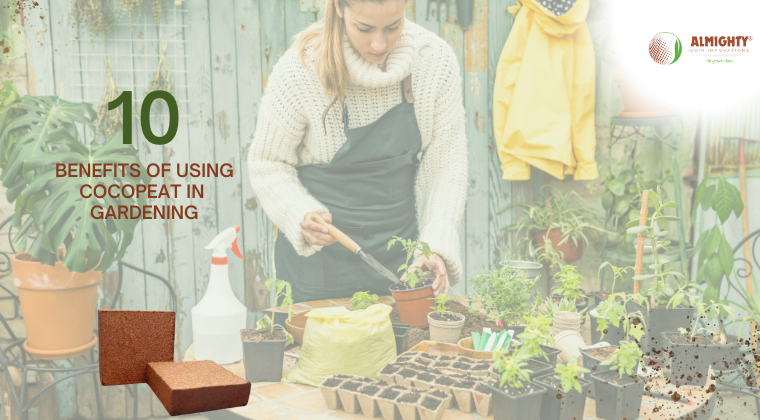
A new class of gardening fertilizer is gaining a lot of attention: coconut peat also known as cocopeat or coir pith. It is derived from the shells of coconuts.
The medium is eco-friendly, sustainable, and versatile, so it is loved by both horticulturists and home gardeners.
This article discusses the top 10 benefits of coco peat in gardening and why it’s a must-have.
What is Coco Peat?
Coco peat, also known as coir pith or coir dust, is a natural by-product of coconut processing. It is the fibrous material left after extracting coir fiber from the husk. Lightweight, porous, and rich in nutrients, coco peat acts as an excellent soil conditioner and growing medium for plants. It is available in form of blocks ,dusts, chips etc..
Quick Facts About Coco Peat
- Origin: Derived from coconut husks.
- Texture: Spongy and lightweight.
- pH Level: Neutral to slightly acidic (5.5-6.5).
- Sustainability: 100% biodegradable and renewable.
Coco peat has gained popularity not only for its benefits but also because it supports sustainable agriculture by reducing dependency on traditional peat moss.
If you’re curious about the broader uses of coconut-based products, check out our Coco Chips Block or Coco Disc & Coco Plugs for various horticultural applications.
1. Excellent Water Retention
Coco peat is known for its incredible ability to retain water—up to eight times its weight. This makes it an ideal growing medium for water-sensitive plants and ensures roots have consistent moisture.
How It Helps in Gardening
- Reduces Watering Frequency: With coco peat, your plants stay hydrated for longer, reducing the need for daily watering.
- Promotes Healthy Roots: The even distribution of moisture helps roots absorb water efficiently, preventing root rot.
For optimal results, use Coco Grow Bags to create a controlled growing environment that maximizes coco peat’s water retention capabilities.
2. Enhances Soil Aeration
One of the standout features of coco peat is its ability to improve soil aeration. The spongy structure of coco peat ensures that air circulates freely around plant roots, creating an ideal growing environment.
Why Soil Aeration Matters
- Encourages Strong Root Development: Proper aeration helps roots grow deeper and more robust.
- Prevents Soil Compaction: Coco peat keeps the soil light and fluffy, preventing it from becoming dense or compacted over time.
- Boosts Microbial Activity: A well-aerated medium fosters the growth of beneficial microbes that contribute to healthy soil ecosystems.
Applications in Gardening
Mixing coco peat with soil is a simple way to improve its texture and porosity. It’s especially useful for container gardening and raised beds, where compaction can be an issue. You can learn more about the versatile applications of coir-based products like Coir Fiber to further enhance soil health.

3. Sustainable and Eco-Friendly
Unlike traditional peat moss, which is mined from wetlands and depletes natural ecosystems, coco peat is a renewable resource made from coconut husks. By using coco peat, gardeners contribute to sustainable practices while enjoying its many benefits.
Environmental Benefits
- Biodegradable: Coco peat naturally decomposes, enriching the soil with organic matter.
- Renewable: Coconut trees are abundant, and their husks are a by-product that would otherwise go to waste.
- Carbon-Neutral: Coco peat production has a low carbon footprint compared to other soil conditioners.
Using products like Low EC Cocopeat Blocks ensures that you are gardening sustainably while supporting soil health.
4. Excellent Water Retention Capacity
Coco peat stands out as a superior gardening medium because of its remarkable water retention properties. This feature makes it particularly beneficial for plants that require consistent moisture levels.
How Coco Peat Retains Water
- High Absorption Rate: Coco peat can absorb water up to 8–10 times its weight.
- Slow Release: It retains moisture and releases it gradually, ensuring plants stay hydrated over longer periods.
- Prevents Water Runoff: The fibrous structure minimizes wastage by holding water within its matrix.
Benefits for Gardeners
- Reduces Watering Frequency: Ideal for busy gardeners, it keeps the soil moist, reducing the need for frequent watering.
- Supports Water-Sensitive Plants: Coco peat creates an optimal environment for moisture-loving plants like ferns, caladiums, and certain vegetables.
- Aids in Drought Conditions: This makes it a valuable addition to gardens in arid regions or during dry spells.
For growers focused on hydroponics or specialized applications, products like Coco Grow Bags combine water efficiency with ease of use.
5. Naturally Resistant to Pests and Diseases
Coco peat is an excellent medium for maintaining healthy plants because of its natural resistance to pests and diseases. This property is especially useful for gardeners who want to minimize the use of chemical pesticides.
Why Coco Peat Resists Pests
- Neutral pH and Clean Composition: Coco peat has a neutral pH and is free from harmful pathogens, making it less attractive to pests.
- Anti-Fungal Properties: It discourages the growth of fungi, which can lead to root rot and other plant diseases.
- Pest-Free Source: High-quality coco peat is pre-treated and sterilized during production, ensuring it’s free from pests.
Gardening Applications
- Seed Starting and Propagation: Using coco peat for germination minimizes the risk of fungal infections in seedlings.
- Container Gardening: It’s an excellent choice for indoor and outdoor potted plants since it creates a pest-resistant environment.
Products like Coco Discs and Plugs are perfect for seed starting and propagation while maintaining a disease-free growing medium.
6. Promotes Root Growth
Healthy roots are the foundation of thriving plants, and coco peat provides an ideal environment for robust root development. Its unique structure allows roots to spread, breathe, and absorb nutrients efficiently.
How Coco Peat Supports Root Development
- Aerated Structure: Coco peat’s fibrous texture ensures proper airflow around the roots, preventing suffocation.
- Balanced Moisture Levels: It maintains the perfect moisture balance, preventing both overwatering and dehydration.
- Nutrient Retention: Coco peat holds onto essential nutrients while ensuring they remain accessible to the roots.
Benefits for Root Health
- Prevents Root Rot: Excess water drains quickly through coco peat, avoiding the buildup that causes root diseases.
- Encourages Deep Rooting: Plants can establish deeper and stronger roots, improving their stability and access to nutrients.
- Suitable for Hydroponics: Its properties make it a great choice for hydroponic systems, ensuring roots get both oxygen and water.
For an enhanced rooting experience, gardeners can explore Coco Peat Blocks, which offer excellent water and air retention capabilities.
7. Eco-Friendly and Sustainable
Coco peat stands out as an environmentally friendly gardening material, making it a popular choice among eco-conscious gardeners. Derived from the coconut husk, it repurposes what was once considered waste, turning it into a valuable resource.
Sustainability of Coco Peat
- Byproduct Utilization: Coco peat is created from the byproducts of coconut processing, ensuring minimal waste.
- Renewable Resource: Since coconuts are harvested multiple times a year, coco peat is a renewable and sustainable material.
- Biodegradable: Unlike synthetic gardening media, coco peat breaks down naturally and enriches the soil when disposed of.
Eco-Friendly Benefits
- Reduces Carbon Footprint: Using coco peat in gardening reduces reliance on peat moss, the extraction of which contributes to habitat destruction and carbon release.
- Minimizes Waste: By repurposing coconut husks, it prevents organic waste from piling up in landfills.
- Chemical-Free: It’s processed without harmful chemicals, making it safe for the environment and organic gardening.
Practical Applications
Products like Coco Grow Bags combine sustainability with convenience, offering an eco-friendly solution for home gardeners and commercial growers.
8. Cost-Effective Gardening Solution
Using coco peat in gardening proves to be a budget-friendly choice, offering long-term value for gardeners. Its durability and multiple reusability cycles make it an economical option compared to traditional soil amendments.
Why Coco Peat is Cost-Effective
- Reusable Medium: Coco peat can be used multiple times without significant degradation in its properties.
- Minimal Replacement Costs: Its resilience allows gardeners to replace it less frequently than other growing mediums.
- Reduced Fertilizer Usage: Since it retains nutrients effectively, coco peat lowers the need for frequent fertilization.
Comparison with Other Growing Mediums
| Feature | Coco Peat | Peat Moss | Soil |
| Durability | High | Low | Medium |
| Reusability | Yes | No | Limited |
| Nutrient Retention | Excellent | Moderate | Variable |
| Cost Over Time | Affordable | Expensive | Moderate |
Tips for Maximizing Cost Savings
- Buy in Bulk: Consider purchasing Coco Peat Blocks for large-scale gardening projects.
- Combine with Other Media: Mix coco peat with garden soil or compost to extend its use while maintaining effectiveness.
- Maintain Proper Care: Wash and rehydrate coco peat after each use to ensure its longevity.
By integrating coco peat into your gardening routine, you achieve excellent results while keeping costs in check.
9. Versatility in Use
Coco peat is incredibly versatile and can be used for a wide variety of gardening applications, whether you are a hobbyist or a professional grower. Its adaptability makes it suitable for a range of plant types and growing conditions.
How Coco Peat Can Be Used
- Seed Starting: Coco peat is an excellent medium for germinating seeds. It provides a sterile environment that promotes healthy root development.
- Soil Amendment: It can be mixed into garden soil to improve texture and enhance its ability to retain moisture.
- Hydroponics: For hydroponic systems, coco peat serves as a stable, soil-free growing medium, ideal for plant roots to thrive.
- Container Gardening: It works wonders in containers and raised beds, providing plants with ample nutrients and water retention.
Specific Applications
- Coco Disc & Coco Plugs are perfect for starting seedlings and can be transplanted directly into pots or the ground.
- Coco Chips Blocks<