

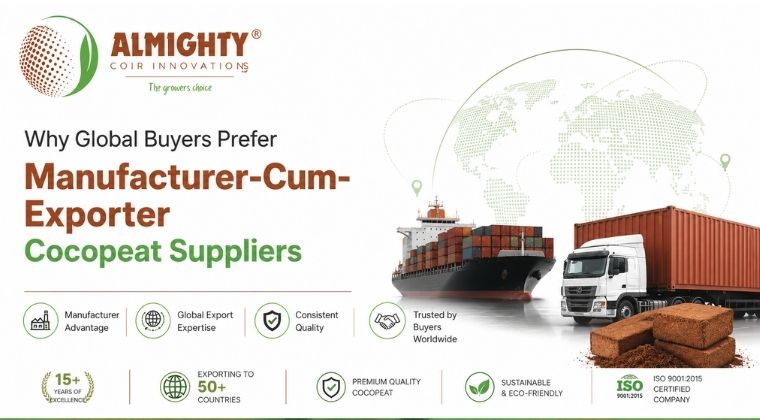
There’s a question every serious cocopeat importer eventually asks themselves — not at the beginning, but usually after one bad shipment.
Why did the EC levels shift between containers? Why did the expansion volume drop in the third order? Who exactly made this product, and where did it actually come from?
The answer, more often than not, traces back to the same root cause: they were buying from a trader, not a manufacturer.
That distinction matters far more than most buyers realise — until it doesn’t go their way.
The Supply Chain Problem Nobody Talks About Openly
The global cocopeat market has grown enormously over the last decade. Demand from substrate growers in the Netherlands, berry farms in Canada, greenhouse operations across the Middle East, and vertical farms throughout Southeast Asia has created a massive, fast-moving trade. And where there’s fast-moving trade, intermediaries multiply.
Many suppliers operating today — presenting themselves as exporters — are actually traders who source from multiple small processors, consolidate product, and ship under their own label. That’s not inherently dishonest. But it does create a fundamental tension: they cannot guarantee what they do not control.
A manufacturer-cum-exporter is a different animal entirely. The same hands that press the cocopeat block are the hands that load the container. There is no invisible middle layer where quality slips, specifications drift, or accountability disappears.
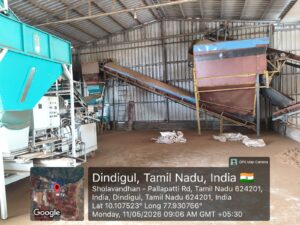
At Almighty Coir, based in Dindigul — one of India’s most established cocopeat-producing regions — this is precisely the model we operate under. We grow our understanding of the product from the raw coir pith itself, through every wash, compress, and pack, to the moment it reaches port.
What “In-Process Quality Control” Actually Means
It’s easy to say “we maintain strict quality control.” Every supplier says this. What matters is where that control sits in the process.
When you manufacture your own product, quality control isn’t a checkpoint at the end — it’s woven into the entire production sequence. EC levels are monitored during washing, not tested after the fact on a finished pallet. Moisture content is managed during drying, not corrected with a report that says it’s within range. Compression quality is verified as the block is formed, not eyeballed when it’s being loaded.
The quality parameters that matter most to growers — EC level, moisture content, expansion volume, fibre percentage, impurity level, compression integrity — all require intervention during production to be truly reliable. A trader who receives finished product from an external processor has no ability to influence any of these at the point where it counts.
This is why you see lot-to-lot variation from trading-based suppliers even when the paperwork looks identical. The product changed at source. They didn’t notice, or couldn’t do anything about it if they did.
Pricing That’s Grounded in Reality, Not Guesswork
There’s a persistent myth in agricultural commodity sourcing that going through a trader is “safer” because of their market knowledge or connections. In practice, what traders offer is margin layered on top of margin — and those layers come out of either your pocket or the manufacturer’s willingness to cut corners to protect their own.
When you buy directly from a manufacturer who exports their own product, the pricing conversation happens at the source. There’s no broker commission buried in the quote, no consolidation fee added upstream, no silent markup from a middleman who never touched the coir.
More importantly, manufacturer-direct pricing tends to be stable. Because production costs are understood and controlled, price forecasting over a season or a year becomes reliable. For importers managing long-term greenhouse contracts or subscription-based growing programmes, this kind of pricing predictability has real operational value — not just at the point of purchase, but in how you plan your own business.
Supply You Can Actually Plan Around
Growers work on schedules. Greenhouse cycles don’t wait for delayed shipments. A growing media supplier that can’t commit to reliable monthly volumes isn’t really a partner — they’re a gamble you’re taking every season.
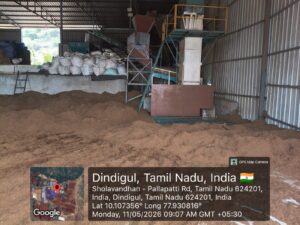
Manufacturer-exporters who control their own raw material sourcing and production planning can make commitments that traders structurally cannot. At Almighty Coir, our raw material relationships in Dindigul’s coir-growing belt, combined with our own production facility, give us the visibility to schedule shipments reliably across months — not just “best efforts” on individual orders.
This matters enormously for importers who are themselves under pressure from their downstream customers. If you’re distributing to commercial growers, your reputation depends on your reliability. That reliability starts at the source.
Uniformity Across the Lot — Not Just the Sample
This is the issue that experienced cocopeat buyers feel most acutely: the sample looks great, the first container is fine, and then something subtly shifts by container three or four.
When product comes from a single, controlled production facility, uniformity across an entire shipment — and across repeated orders — is achievable by design. The same raw material batches, the same washing protocol, the same compression settings, the same drying duration. Not approximately the same. The same.
For commercial growers using cocopeat as a primary substrate, this consistency isn’t a nice-to-have. Inconsistent EC or expansion ratios mean inconsistent growing conditions, which translate into yield variation and real commercial losses. The growing media industry is increasingly sophisticated; buyers have stopped accepting batch variation as an inevitable feature of the product.
When Something Goes Wrong — Speed Matters
No production process is perfect. The question is how quickly problems are identified and resolved.
A trader who discovers a quality issue has to trace it back to a manufacturer they may or may not have a direct relationship with, negotiate a resolution across layers, and hope the response is faster than the next shipment date. Each layer of the supply chain adds delay and diffuses accountability.
A manufacturer-exporter can identify an issue on the production floor and correct it within the same day’s run. They know exactly which batch is affected, exactly what went wrong, and exactly how to fix it. This kind of operational responsiveness is what long-term supply relationships are built on — not perfection, but the credibility to handle imperfection well.
The Factory Visit Question
Here’s something worth considering: would your current supplier let you walk through their production facility unannounced?
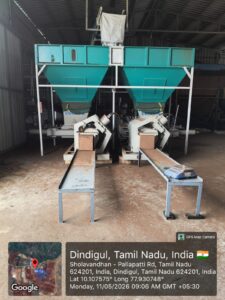
Manufacturers have a factory to show you. It’s a point of pride. The equipment, the washing tanks, the compression lines, the drying yards — these tell the story of how the product is made, and genuine manufacturers are usually eager to tell that story in person.
At Almighty Coir, we actively welcome customer visits before order confirmation. Not because it’s a sales tactic, but because seeing the process removes uncertainty — and uncertainty is expensive in a sourcing relationship. When a buyer stands in our facility and watches a block come off the line, the conversation about quality and consistency becomes very concrete, very quickly.
Customisation Without the Runaround
Commercial cocopeat demand is not monolithic. A strawberry grower in Spain has different requirements from a cannabis cultivator in Portugal or a vegetable producer in the UAE. EC tolerances vary. Expansion ratios matter differently for different substrates. Packaging requirements shift from market to market.
When the manufacturer and the exporter are the same entity, customisation requests go directly to the people who can actually execute them. There’s no translation loss across a supply chain, no misinterpretation between a trader’s note and a manufacturer’s production order.
Low EC for sensitive crops, high expansion for specific blends, customised grow bags, open-top bags, pallet formats, block bundles — these aren’t special favours. They’re just production decisions, made by the people doing the production.
The Communication Difference
Anyone who has managed an international supply relationship knows that most of the friction isn’t in the product — it’s in the communication. Delays in shipping updates, vague answers about production status, technical questions that bounce between contacts without resolution.
When your supplier is your manufacturer, you’re talking to someone who knows the current status of your order because they’re standing in the facility where it’s being made. Production timelines aren’t estimates assembled from second-hand information — they’re direct reporting from the floor.
This kind of communication transparency is hard to quantify, but it dramatically reduces the operational anxiety of managing international supply. Buyers who have experienced both models almost universally prefer the directness of working manufacturer-to-importer.
What Long-Term Partnership Actually Looks Like
The best cocopeat supply relationships we’ve seen — and been part of — don’t look like repeated spot purchases. They look like a grower or importer who has stopped thinking about their cocopeat supply as a sourcing problem, because it’s been solved.
That outcome requires trust. Trust is built on consistent quality. Consistent quality comes from controlled manufacturing. Controlled manufacturing is what a manufacturer-cum-exporter delivers, by definition.
Our ambition at Almighty Coir isn’t to move volume. It’s to be the kind of supplier that makes a buyer’s operation more reliable than it was before they found us. That’s a different objective — and it produces a different kind of relationship.
A Note on Where We Come From
Dindigul, Tamil Nadu has been a centre of coir processing in India for generations. The raw material quality, the accumulated technical knowledge, and the established infrastructure in this region are genuine advantages — not marketing language.
When we say we are a cocopeat manufacturer in India exporting directly to global markets, we’re describing a specific operational reality: coir pith sourced locally, processed in our facility, shipped under our name, with our quality commitment attached.
If you’re evaluating cocopeat suppliers in India and want to understand what distinguishes a manufacturer-exporter from a trading intermediary, we’d welcome the conversation — or the visit.
FAQs
1. What is a manufacturer-cum-exporter cocopeat supplier?
A manufacturer-cum-exporter is a cocopeat manufacturer in India who produces and exports the product directly — with no middlemen involved.
2. Why should I import cocopeat directly from a manufacturer instead of a trader? Importing cocopeat from a manufacturer gives you better quality control, stable pricing, and direct accountability in every shipment.
3. How does a cocopeat manufacturer in India ensure consistent quality across shipments?
A cocopeat manufacturer monitors EC levels, moisture content, and compression during production — not after packing.
4. Can a cocopeat supplier in India customise products for different crops?
Yes, a cocopeat supplier who manufactures their own product can adjust EC, expansion volume, and packaging based on your crop requirements.
5. What makes Almighty Coir a reliable cocopeat exporter for global buyers?
Almighty Coir manufactures, quality-tests, and ships every order from its own Dindigul facility — giving global buyers full traceability and supply reliability.