

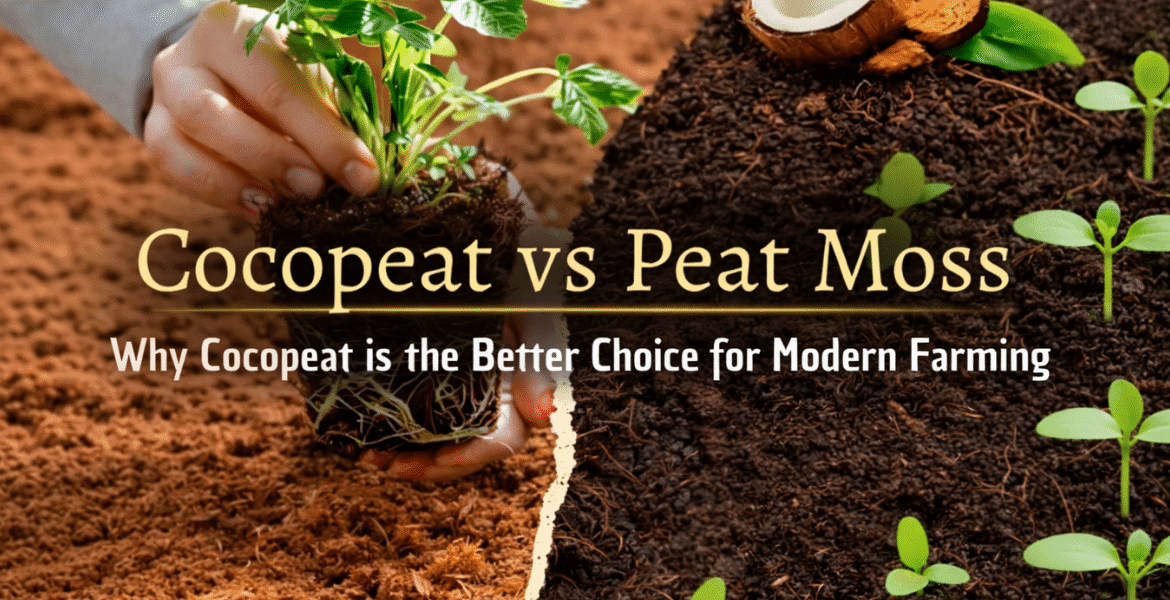
Introduction
Modern farming and gardening are evolving. Today, growers are not just looking for good yields but also for sustainable, eco-friendly, and cost-effective growing media. Two popular options often compared are peat moss soil and cocopeat. While both improve soil quality, cocopeat is increasingly becoming the preferred choice for farmers, gardeners, and commercial growers.
What Is Peat Moss?
Peat moss is an organic material formed over thousands of years from partially decomposed moss in wetlands. It is commonly used as organic peat moss in gardening because of its ability to retain moisture and improve soil texture.
Benefits of Peat Moss Soil
- Improves water retention in sandy soil
- Lightens heavy soil
- Commonly used in potting mixes and nurseries
Limitations of Moss Soil
Despite its benefits, moss soil comes with some drawbacks:
- Peat moss is a non-renewable resource
- Harvesting damages natural wetlands
- Takes thousands of years to regenerate
- Can become acidic over time, affecting plant health
Because of these concerns, many growers are moving away from soil with peat moss toward more sustainable alternatives.
What Is Cocopeat?
Cocopeat, also known as coir pith, is a natural byproduct of coconut husks. It is processed, washed, and compressed into easy-to-use forms such as coco peat blocks.
India is one of the largest producers in the world, making Indian suppliers a reliable coco peat manufacturer and coco peat exporter for global markets.
Key Features of Cocopeat
- 100% natural and biodegradable
- Renewable and eco-friendly
- Excellent water-holding capacity
- Promotes strong root development
Coco peat vs Peat Moss: A Simple Comparison
| Feature | Coco peat | Peat Moss Soil |
|---|---|---|
| Source | Coconut husk (renewable) | Wetlands (non-renewable) |
| Water retention | Excellent | High |
| Aeration | Very good | Moderate |
| pH level | Near neutral | Acidic |
| Reusability | Reusable multiple times | Limited reuse |
| Environmental impact | Eco-friendly | Harmful to ecosystems |
Compared to moss soil, cocopeat provides better aeration and long-term soil health without damaging the environment.
Why Cocopeat Is the Better Choice for Modern Farming
1. Easy to Handle and Use
Cocopeat is lightweight and easy to work with, making planting, pot filling, and bed preparation simple for farmers and gardeners. This ease of use saves time and effort, especially in large-scale farming operations supplied by a reliable coco peat exporter.
2. Consistent Growing Medium
Cocopeat offers uniform texture and quality across batches, which helps crops grow evenly. This consistency reduces plant stress and gives farmers more predictable results throughout the growing cycle.
3. Cost-Effective Over Time
One of the major benefits of coco peat is that it can be reused after proper cleaning and treatment. This helps farmers reduce input costs while maintaining healthy crops, making cocopeat a smart long-term investment.
4. Supports Modern Farming Practices
Cocopeat fits well with modern farming methods such as greenhouses, precision farming, and hydroponics. With support from an experienced coco peat exporter, growers can rely on consistent supply and quality for future-ready agricultural systems.
Cocopeat Blocks: Convenient and Efficient
Compressed coco peat blocks expand when water is added, producing large volumes of ready-to-use growing medium. This makes them ideal for farmers and gardeners looking for efficiency and consistency.
A coco peat block for gardening is easy to store, transport, and use, especially when compared to bulky peat moss bags.
How to Choose the Right Cocopeat Supplier
When selecting a supplier, consider:
- Manufacturing quality and certifications
- Moisture and EC control
- Custom packaging options
- Experience as a global coco peat exporter
Choosing the right partner ensures consistent quality and long-term farming success. Almighty Coir is a certified cocopeat manufacturer and exporter across the world.
Conclusion
Coco peat is a practical and eco-friendly choice for today’s farming needs. It supports healthy plant growth, is easy to use, and is much more sustainable than peat moss. For modern gardeners and farmers, cocopeat is a smart and responsible option.
Frequently Asked Questions (FAQs)
- Is coco peat better than peat moss?
Yes, cocopeat is more eco-friendly, renewable, and suitable for modern farming. - Can coco peat replace peat moss soil?
Yes, cocopeat can be used instead of peat moss soil for most farming and gardening needs. - Why is peat moss not sustainable?
Peat moss takes many years to form, and its extraction damages wetland ecosystems. - What is a coco peat block used for?
A coco peat block is used for gardening and farming after expanding it with water. - Why choose coco peat from India?
India offers high-quality coco peat with a reliable supply from experienced manufacturers and exporters.